
Last Updated on September 25, 2026 by alizni
In a significant move to bolster bilateral relations and address pressing logistical challenges, Nepal’s Infrastructure Development Minister Sunil Lamsal recently held a high-level meeting with the Chinese Ambassador to Nepal, Wang Maoming. The discussions, which took place at the Ministry of Infrastructure Development in Singha Durbar, Kathmandu, centered on key issues of mutual interest, including post-disaster reconstruction, bilateral trade facilitation, and the optimization of crucial border crossings between the two neighboring nations.

Rebuilding Rasuwa’s Flood-Damaged Infrastructure
One of the primary focal points of the bilateral talks was the urgent need to reconstruct infrastructure in the Rasuwa district, which has suffered severe damage due to recent devastating floods and landslides. The monsoon season in Nepal frequently brings torrential rains that disrupt highways, bridges, and local communication networks, isolating remote communities and halting vital economic activities.

Minister Lamsal emphasized the critical need for Chinese assistance in restoring these damaged structures. The reconstruction of roads and bridges leading to the northern border is not just a local necessity but a national priority for Nepal, as these routes serve as lifelines for international trade. By securing China’s technical and financial support, Nepal aims to build more resilient infrastructure capable of withstanding future climate-induced disasters.
Revitalizing Key Border Crossings: Rasuwa-Kerung, Tatopani, and Korala
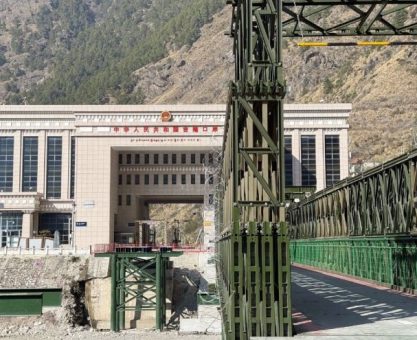
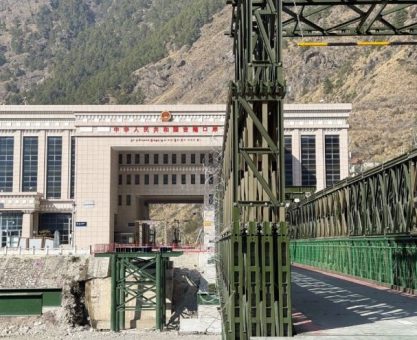
The meeting also addressed the operational efficiency of major border points that facilitate trade between Nepal and China. Specifically, the discussions highlighted the need to fully resume and optimize operations at the Rasuwa-Kerung border crossing, which has faced intermittent disruptions over the past few years due to weather conditions and administrative challenges.
Additionally, the effective operation of the Tatopani and Korala border points was put forward as a key agenda item. These border crossings are essential gateways for goods flowing between the two countries. Enhancing their capacity, streamlining customs procedures, and ensuring year-round accessibility will significantly boost bilateral trade, reduce transit times for traders, and lower the costs of imported goods in Nepali markets.
Restoring Connectivity for Over 600,000 Citizens
Beyond commercial trade, the physical connectivity between Nepal and China has a profound social impact. During the discussions, Minister Lamsal pointed out that approximately 600,000 Nepali citizens rely directly or indirectly on these border regions for their livelihoods, travel, and state connectivity. The disruption of border roads and checkpoints severely limits their mobility and access to essential services.
By ensuring smooth, reliable, and safe passage through crossings like Rasuwa-Kerung and Tatopani, both governments can greatly improve the daily lives of these border communities. Restoring seamless movement will allow local residents to resume trade, access healthcare, and maintain social ties across the border with greater ease.
The Strategic Value of Nepal-China Bilateral Cooperation
This latest diplomatic engagement underscores the strategic partnership between Kathmandu and Beijing. As a landlocked nation, Nepal heavily depends on robust transit routes to diversify its trade and reduce transit vulnerabilities. Collaborative efforts in infrastructure development not only foster economic growth but also strengthen diplomatic ties.
Ambassador Wang Maoming expressed China’s willingness to coordinate closely with Nepali authorities to address these challenges. The commitment to mutual assistance reflects a shared vision of regional prosperity, where improved road networks and modernized border facilities pave the way for a more integrated South Asian economy.
Conclusion
The constructive dialogue between Minister Sunil Lamsal and Ambassador Wang Maoming marks a positive step forward in addressing Nepal’s immediate infrastructural needs and long-term economic goals. By focusing on the reconstruction of Rasuwa’s flood-affected areas and the optimization of key border crossings like Rasuwa-Kerung, Tatopani, and Korala, both nations are laying the groundwork for more resilient bilateral trade. Moving forward, timely execution and close coordination will be vital to turning these discussions into tangible benefits for the hundreds of thousands of citizens who depend on these vital trans-Himalayan corridors.