

Last Updated on September 20, 2026 by alizni
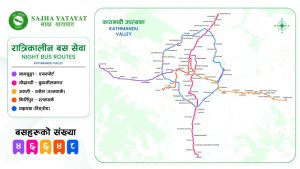
Commuting in the Kathmandu Valley after dusk has historically been a significant challenge for residents and visitors alike. As the sun sets, the bustling streets of Nepal’s capital have traditionally seen a sharp decline in public transportation options, leaving late-shift workers, travelers, and night owls with few choices other than expensive private taxis or long walks. However, a transformative shift is underway. In a bid to address this long-standing issue, local authorities have officially expanded the night bus service to cover six key routes across the Kathmandu Valley, promising safer, more affordable, and highly accessible nocturnal travel.

A Major Boost for Kathmandu’s Nightlife and Commuters
The expansion of the night bus service represents a landmark collaborative effort among several local government bodies. Spearheaded by the Kathmandu Metropolitan City (KMC) in coordination with Lalitpur Metropolitan City, Chandragiri Municipality, and Budhanilkantha Municipality, this initiative aims to breathe new life into the valley’s nocturnal economy. By bridging the gap in late-night transit, the local governments are addressing a critical infrastructure deficit that has long restricted economic and social activities after dark.

For years, businesses such as restaurants, hotels, and retail outlets in Kathmandu have had to wind down early, partly because employees had no reliable way to return home safely. Similarly, travelers arriving late at the Tribhuvan International Airport or the central bus terminals faced exorbitant fares from private transport operators. With the introduction and expansion of these systematic night bus routes, the city is positioning itself as a modern, vibrant metropolis capable of supporting a 24-hour ecosystem.
Detailing the Expanded Night Bus Routes
The journey toward establishing a robust night bus network began earlier this year with the launch of pilot operations on two primary routes: the Nagdhunga-Airport route and the Lagankhel-Budhanilkantha route. Following the positive reception and demonstrated demand from the public, authorities have now integrated four additional routes into the system, bringing the total number of active night transit pathways to six.
These newly added routes are strategically mapped to connect dense residential hubs, commercial zones, and essential transit gateways. By linking areas under the jurisdiction of Kathmandu, Lalitpur, Chandragiri, and Budhanilkantha, the network ensures that commuters can traverse major municipal boundaries without hassle. This comprehensive coverage ensures that whether you are heading home from a late shift in central Kathmandu to the outskirts of Chandragiri, or traveling from Lalitpur to Budhanilkantha, there is a dependable public transport option available well into the night.
Enhancing Safety and Convenience After Dark
Beyond economic benefits, the primary driver behind the night bus service is public safety and convenience. Walking through poorly lit streets or waiting for unreliable transport late at night poses safety risks, particularly for women, students, and elderly citizens. The presence of scheduled, well-monitored municipal buses offers a secure environment for passengers, encouraging more people to travel without fear.
Furthermore, affordability is a cornerstone of this initiative. For many working-class citizens, spending a significant portion of their daily earnings on a single late-night taxi ride is simply unsustainable. The night bus service offers a pocket-friendly alternative, ensuring that mobility within the city remains an egalitarian right rather than a luxury reserved for those who can afford private vehicles. This democratization of transport is a crucial step toward equitable urban development.
The Future of Public Transit in the Capital
While the expansion to six routes is a massive milestone, the long-term success of Kathmandu’s night bus service will rely heavily on consistent execution, public awareness, and technological integration. For the service to become a staple of daily life, maintaining strict adherence to schedules and ensuring bus frequency are paramount. Commuters need to trust that a bus will arrive at the designated stop at the promised time.
Looking ahead, there is immense potential to integrate these services with digital tools. Implementing real-time GPS tracking via mobile applications, digital ticketing systems, and well-lit, informative bus stops would elevate the commuter experience to international standards. As the local municipalities continue to gather feedback from this phase, residents remain optimistic that this is just the beginning of a larger revolution in Nepal’s urban transport landscape.
Conclusion
The expansion of the Kathmandu night bus service to six routes is more than just an upgrade to the transport sector; it is a vital step toward building a safer, more inclusive, and economically active capital valley. By fostering strong municipal collaboration, Kathmandu is showing how local governance can directly improve the daily lives of its citizens. Whether you are a late-night worker, a traveler, or someone looking to enjoy the city’s evening offerings, these night buses are set to make your journey smoother and safer.