
Last Updated on June 22, 2026 by AMH
Koshi Province EV Tax Rate in Nepal 2026
Electric vehicles (EVs) are becoming increasingly popular in Nepal due to rising fuel prices, lower maintenance costs, and government support for clean transportation. As more consumers switch to electric cars, understanding the EV tax rate in Nepal is crucial before making a purchase.

If you are planning to buy an electric car, electric jeep, electric van, or electric bus in Koshi Province, it is important to know the latest annual EV road tax rates. The Koshi Province Government has categorized electric vehicles based on motor power (kW) and applies different tax rates for private and commercial vehicles.

This guide explains the latest Koshi Province electric vehicle tax rates, how EV taxes are calculated, and what EV owners need to know.
Private Electric Vehicle Tax Rate in Koshi Province
The annual tax for privately registered electric vehicles is based on the motor capacity measured in kilowatts (kW).
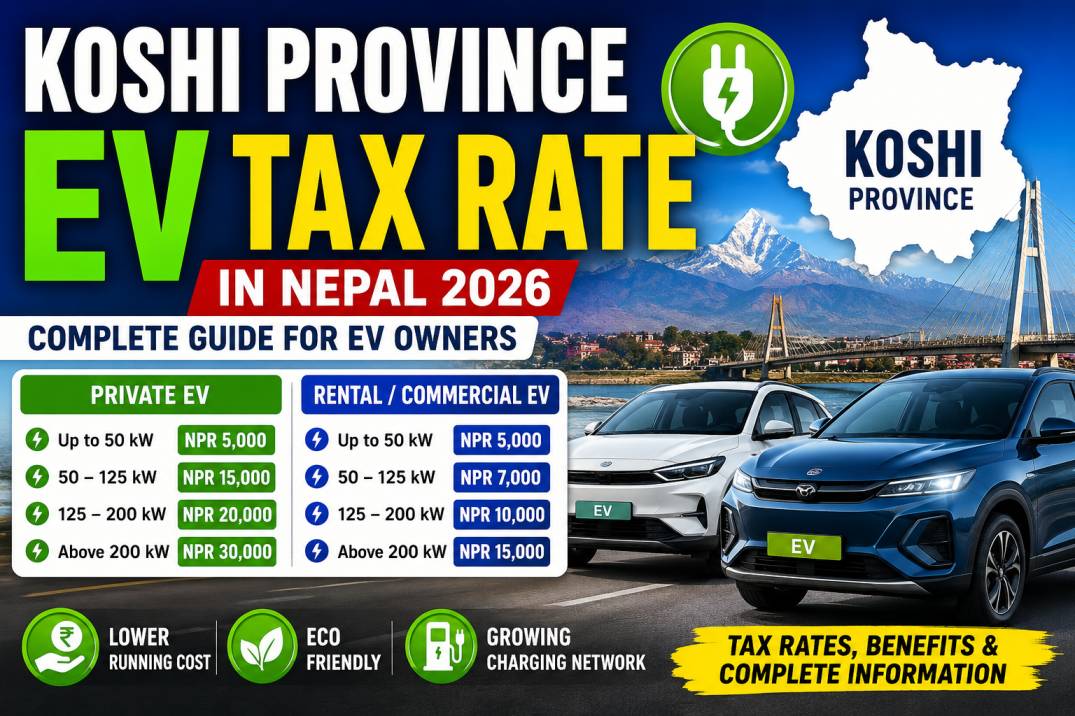
Annual Tax Rate for Private EVs
| Motor Capacity (kW) | Annual EV Tax |
|---|---|
| Up to 50 kW | NPR 5,000 |
| Above 50 kW to 125 kW | NPR 15,000 |
| Above 125 kW to 200 kW | NPR 20,000 |
| Above 200 kW | NPR 30,000 |
This category applies to:
- Electric Cars
- Electric Jeeps
- Electric Vans
- Electric Microbuses
- Electric Buses
Private EV owners must pay the applicable annual vehicle tax during registration renewal.
Commercial and Rental EV Tax Rate in Koshi Province
To encourage electric public transportation and commercial vehicle adoption, Koshi Province has introduced lower tax rates for rental and commercial electric vehicles.
Annual Tax Rate for Commercial EVs
| Motor Capacity (kW) | Annual EV Tax |
|---|---|
| Up to 50 kW | NPR 5,000 |
| Above 50 kW to 125 kW | NPR 7,000 |
| Above 125 kW to 200 kW | NPR 10,000 |
| Above 200 kW | NPR 15,000 |
This category generally includes:
- Electric Taxis
- Ride-Sharing Vehicles
- Tourist Transport Vehicles
- Commercial Passenger EVs
- Fleet Vehicles
The lower tax structure helps businesses reduce operating costs and promotes sustainable transportation across Nepal.
How EV Tax is Calculated in Nepal
Unlike petrol and diesel vehicles, where taxes are commonly based on engine displacement (CC), electric vehicle taxes are calculated using motor power output measured in kilowatts (kW).
Before purchasing an EV, buyers should verify the motor capacity mentioned in the vehicle specifications.
Example EV Tax Calculation
- An electric car with a 45 kW motor falls under the “Up to 50 kW” category and pays NPR 5,000 annually.
- A 100 kW electric vehicle falls under the “50–125 kW” category and pays NPR 15,000 annually for private registration.
- A 180 kW EV falls within the “125–200 kW” category and pays NPR 20,000 annually.
- A premium EV with a 250 kW motor falls into the “Above 200 kW” category and pays NPR 30,000 annually.
Why EV Adoption is Growing in Nepal
The electric vehicle market in Nepal has experienced significant growth in recent years. Several factors have contributed to this trend.
Lower Operating Costs
Charging an electric vehicle is considerably cheaper than refueling a petrol or diesel vehicle. This allows EV owners to save thousands of rupees annually.
Reduced Maintenance Expenses
Electric vehicles have fewer moving parts compared to conventional vehicles, reducing maintenance requirements and repair costs.
Environmental Benefits
EVs produce zero tailpipe emissions, helping reduce air pollution in major cities and contributing to a cleaner environment.
Government Support
Both federal and provincial governments have introduced favorable policies, customs incentives, and tax structures to encourage EV adoption.
Expanding Charging Infrastructure
Nepal’s charging network continues to expand, making long-distance travel more convenient for electric vehicle owners.
Popular EV Categories in Nepal
Several electric vehicles currently available in Nepal fall within the 50 kW to 125 kW range, making them attractive from a tax perspective.
Popular categories include:
- Electric SUVs
- Electric Hatchbacks
- Electric Sedans
- Electric Crossovers
- Commercial Electric Vans
Consumers often compare motor capacity, battery range, charging speed, and annual tax liability before making a purchase decision.
Benefits of Understanding EV Tax Rates Before Buying
Knowing the annual EV tax rate helps buyers:
- Calculate total ownership costs
- Compare different EV models
- Plan long-term expenses
- Select the most cost-effective vehicle category
- Make informed investment decisions
Many buyers focus only on the purchase price, but annual road tax is also an important component of vehicle ownership.
Future of Electric Vehicles in Koshi Province
As Nepal continues to promote clean energy and sustainable transportation, electric vehicle adoption is expected to increase significantly. The country’s hydropower potential provides a strong foundation for electric mobility, reducing dependence on imported fossil fuels.
The current Koshi Province EV tax structure is designed to balance revenue collection while encouraging consumers and businesses to transition toward environmentally friendly transportation solutions.
Conclusion
The latest Koshi Province EV tax rates in Nepal range from NPR 5,000 to NPR 30,000 annually for private electric vehicles and NPR 5,000 to NPR 15,000 for commercial electric vehicles, depending on motor capacity.
Whether you are purchasing an electric car, electric SUV, electric van, or commercial EV, understanding these tax brackets can help you estimate annual ownership costs and choose the right vehicle for your needs.
As the EV market in Nepal continues to grow, staying informed about electric vehicle tax rates, EV registration costs, road tax policies, and government incentives will help buyers make smarter and more economical transportation decisions.