

Last Updated on September 20, 2026 by alizni
For years, navigating the Kathmandu Valley after dusk has been a notorious challenge for daily commuters. Once the sun sets, the bustling streets of Nepal's capital historically saw a rapid decline in public transportation options. This left daily wage earners, hospitality workers, students, and late-shift professionals with few choices other than expensive private taxis or long, unsafe walks home. However, a transformative shift is currently underway. In a major bid to revolutionize urban mobility, local authorities have officially expanded the Kathmandu night bus service to cover six crucial routes across the valley.

This strategic expansion represents a collaborative milestone achieved by several local government bodies, including the Kathmandu Metropolitan City (KMC), Lalitpur Metropolitan City (LMC), Chandragiri Municipality, and Budhanilkantha Municipality. By working together, these local governments are addressing a long-standing gap in the valley’s infrastructure, paving the way for a more vibrant, accessible, and active night-time economy.

The Vision Behind Kathmandu's Night Bus Expansion
The decision to expand late-night public transport is not just about moving vehicles; it is about transforming the socio-economic landscape of the Kathmandu Valley. Historically, Kathmandu has shut down relatively early compared to other major Asian capitals. Businesses closed early, and streets grew quiet, largely because employees and customers had no reliable way to return home.
By introducing and now expanding the night bus service, municipal leaders aim to foster a safer, more inclusive environment. This initiative ensures that night-shift workers in healthcare, security, media, and hospitality can travel securely without spending a significant portion of their earnings on private transport. Furthermore, it boosts the local economy by allowing restaurants, retail shops, and entertainment venues to remain open longer, knowing their staff and patrons have access to affordable transit.
Mapping the Six Night Bus Routes
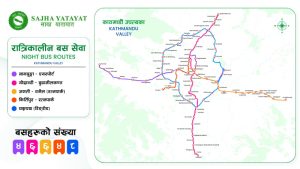
The night bus initiative initially kicked off on April 14—coinciding with the Nepali New Year—with services debuting on two pilot routes: the Nagdhunga-Airport route and the Lagankhel-Budhanilkantha route. The positive reception and clear demand from the public quickly prompted authorities to scale up the operations.
Starting recently, four additional routes were integrated into the network, bringing the total to six active night bus routes. These carefully selected paths link dense residential neighborhoods with major commercial, medical, and transit hubs:
- Nagdhunga to Airport: Connecting the western entry point of the valley directly to Tribhuvan International Airport.
- Lagankhel to Budhanilkantha: Bridging the southern hub of Lalitpur with the northern residential foothills of Budhanilkantha.
- Four New Expanded Routes: These routes have been strategically mapped to cover other high-traffic corridors, ensuring that key commercial zones, hospitals, and residential areas are seamlessly connected during the late-night hours.
These routes ensure that the major municipal areas of Kathmandu, Lalitpur, Budhanilkantha, and Chandragiri are interconnected, making cross-valley travel feasible even past midnight.
Enhancing Commuter Safety and Convenience
One of the primary concerns for night-time commuters, particularly women and elderly citizens, is personal safety. The expansion of the night bus service directly addresses this issue. Municipalities are working in tandem with local law enforcement to ensure that these buses are well-monitored, brightly lit, and safe for all passengers.
Additionally, the economic relief provided by these buses cannot be understated. In Kathmandu, hailing a taxi late at night often comes with inflated nighttime fares, which are unaffordable for the average citizen. The night bus service offers a highly subsidized, standardized fare structure, making night travel democratic and accessible to everyone, regardless of their income level.
What Lies Ahead for Valley Public Transit?
While the expansion to six routes is a massive step forward, it is only the beginning of a larger vision for Kathmandu’s public transport system. For the service to remain sustainable, local authorities must focus on maintaining strict schedules, ensuring vehicle maintenance, and actively promoting the service to build a steady passenger base.
In the future, digital integration—such as real-time bus tracking apps, digital ticketing, and well-lit smart bus stops—could further elevate the commuter experience. If successful, this model could inspire other major urban centers in Nepal, such as Pokhara and Biratnagar, to implement similar night-time transit solutions.
Conclusion
The expansion of the night bus service to six routes is a shining example of what proactive local governance can achieve. By prioritizing the mobility needs of its citizens, Kathmandu is slowly transitioning into a modern, 24-hour city. As more residents adapt to this service, the valley can look forward to safer streets, a stronger night economy, and a significantly improved quality of life for all its inhabitants.