
Last Updated on June 22, 2026 by AMH
BYD ATTO 3 vs Tata Tiago EV: Which Electric Car for Nepal?
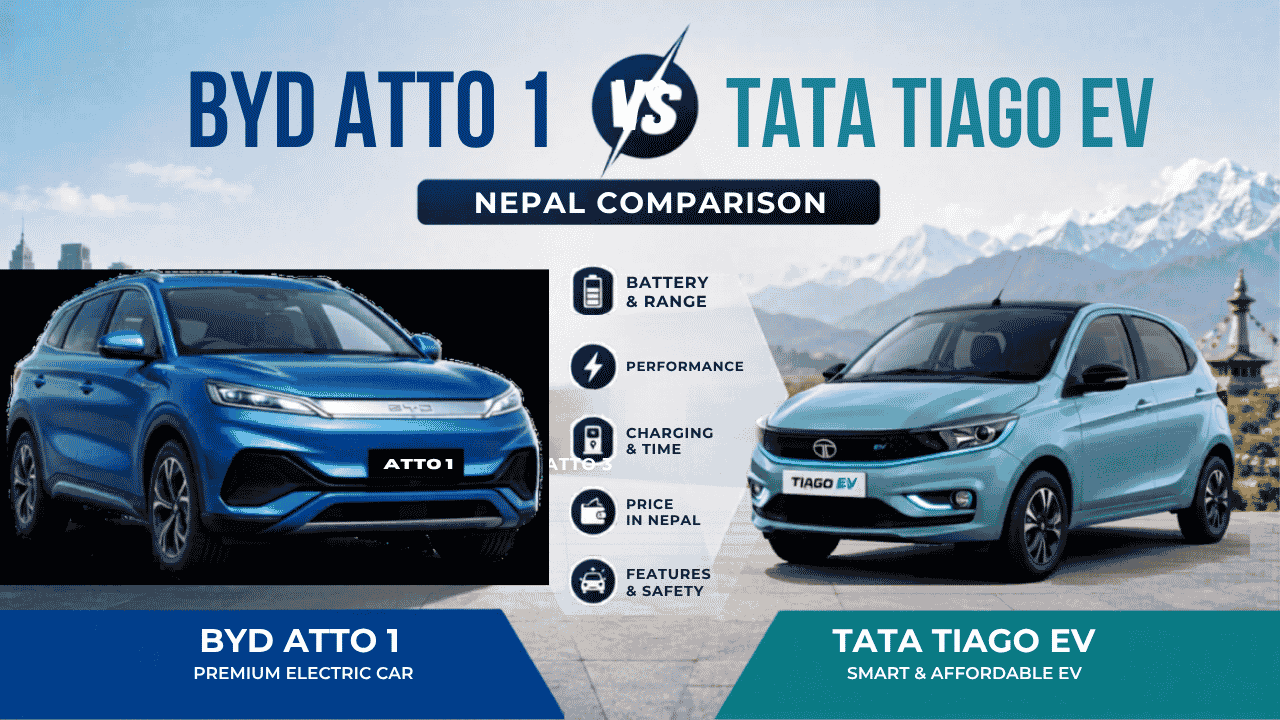
The electric vehicle (EV) wave is gaining momentum in Nepal, with more options becoming available for discerning buyers. Two distinct contenders currently capturing attention are the BYD ATTO 3, a stylish electric SUV, and the Tata Tiago EV, a more accessible electric hatchback. For Nepali consumers, choosing between them involves understanding their strengths in the context of our unique road conditions, charging infrastructure, and budget considerations.
Understanding the Contenders
BYD, distributed in Nepal by Cimex Inc., has positioned the ATTO 3 as a premium yet practical electric SUV. It aims to offer a blend of modern technology, comfort, and decent range. On the other hand, Tata Motors, represented by Sipradi Trading Pvt. Ltd., has brought the Tiago EV as an entry-level electric car, making EV ownership more affordable and accessible to a wider segment of the Nepali population.

BYD ATTO 3: The Electric SUV
The BYD ATTO 3 stands out with its SUV-like stance, offering higher ground clearance which is a significant advantage for Nepal’s often uneven roads and speed bumps. Its design is contemporary, and the interior boasts a futuristic appeal with ample space for families.
Performance and Range
BYD claims competitive range figures for the ATTO 3, which are crucial for Nepali users who might face longer drives between charging points, especially outside major cities. The performance is generally smooth and responsive, typical of EVs, making city driving and highway cruising enjoyable.
Features and Practicality for Nepal
The ATTO 3 comes equipped with modern features, including advanced driver-assistance systems (ADAS) in higher trims, a large infotainment screen, and comfortable seating. Its SUV form factor and higher ground clearance are key selling points for navigating Nepal’s diverse terrain. While specific pricing in NPR is subject to launch, it is expected to be positioned in the premium segment of the EV market.
Charging in Nepal
Charging the ATTO 3 can be done at home or at public charging stations. Nepal’s charging infrastructure is growing, with over 1200 stations nationally, including those managed by the Nepal Electricity Authority (NEA). The ATTO 3 supports fast charging, reducing downtime during longer journeys.
Tata Tiago EV: The Accessible Electric Hatchback
The Tata Tiago EV aims to democratize electric mobility in Nepal. It offers the familiarity of the Tiago hatchback platform with the added benefits of electric propulsion, making it a potentially attractive option for urban commuters and first-time EV buyers.
Performance and Range for City Use
The Tiago EV offers adequate performance for city driving and short to medium-distance commutes. Its range is designed to cater to daily needs, and while it might be less than the ATTO 3, it’s sufficient for many Nepali users who primarily drive within cities like Kathmandu, Pokhara, or Biratnagar.
Features and Practicality for Nepal Roads
As a hatchback, the Tiago EV is nimble and easy to maneuver in congested city traffic. Its ground clearance, while lower than the ATTO 3, is generally manageable for city roads. The interior is practical and functional. The key advantage for Nepali buyers is its expected affordability, making the transition to an EV more financially feasible.
Charging the Tiago EV
Similar to the ATTO 3, the Tiago EV can be charged at home. The growing public charging network across Nepal also provides options for convenient top-ups. For the Tiago EV, charging time is also a consideration, with AC charging taking longer than DC fast charging.
Key Differences and Nepal Market Relevance
Ground Clearance: The BYD ATTO 3 has a clear advantage with its higher ground clearance, making it more suitable for rougher roads and unpaved sections common in Nepal’s rural areas and even some urban outskirts. The Tiago EV is better suited for well-maintained city roads.
Price: The Tata Tiago EV is expected to be significantly more affordable, targeting a mass-market appeal. The BYD ATTO 3 will likely be priced higher, appealing to buyers looking for a more premium EV experience with SUV practicality.
Vehicle Type: SUV vs. Hatchback. This choice depends on user needs. Families or those who frequently carry more luggage or need more versatility might lean towards the ATTO 3. Commuters or smaller households might find the Tiago EV perfectly adequate and more economical.
Range: While both offer competitive ranges for their segments, the ATTO 3 generally offers a longer range, providing more flexibility for inter-city travel without frequent charging stops. The Tiago EV’s range is more focused on daily urban commutes.
Charging Infrastructure: Both vehicles benefit from Nepal’s expanding charging network. However, the longer-range ATTO 3 might encourage more extensive travel, making the availability and speed of charging stations more critical for its users.
Conclusion for Nepali Buyers
Choosing between the BYD ATTO 3 and the Tata Tiago EV in Nepal hinges on your priorities and budget. If you require an electric vehicle that can comfortably handle Nepal’s varied road conditions, offers more space, and you have a higher budget, the BYD ATTO 3 is a compelling option.
However, if you are looking for an affordable entry into the world of electric cars, primarily for city commuting, and value practicality and lower running costs, the Tata Tiago EV presents an excellent proposition. Both vehicles contribute to Nepal’s sustainable mobility goals, and the growing availability of charging points makes EV ownership increasingly viable across the country.